
Product launch PR earns coverage when it gives journalists evidence of change, such as a customer result, new data or an expert who can explain a market problem. For B2B companies in the Benelux, that story must be ready weeks before launch day and adapted to each country, language and newsroom.
What is product launch PR in a B2B market?
Product launch PR is the planned work of turning a new product or service into independent coverage in business media, trade press, podcasts and analyst commentary. That coverage is earned media, which means an editor chose to publish it and the company did not pay for the space. In B2B, the audience is a buying group that often builds its shortlist long before it speaks to sales. The 6sense B2B Buyer Experience Report (2025), based on nearly 4,000 buyers worldwide, found that the winning vendor was already on the day one shortlist 95% of the time.
First contact with sellers came 61% of the way through the buying journey. A launch therefore has a wider job than announcing features. It has to make the company known and credible to people who are not yet talking to it, through sources those people already read and trust.
Why do most product launches get no press coverage?
Most product launches get no coverage because they reach journalists as sales messages with little relevance to their readers. In the Cision State of the Media Report (2026), a survey of 1,899 media professionals in 19 markets, 72% said no more than a quarter of pitches are relevant. The leading reasons for rejection were a poor fit with the audience (82%), promotional language (53%) and the lack of a clear news angle (34%). Product news faces an extra hurdle, as 20% of respondents said they do not work with launch or update pitches at all.
When asked what they want more of, 47% chose data or research, 45% embargoed or early information and 42% access to experts. Only 22% chose press releases. A B2B launch plan should therefore budget for evidence, access and targeting before anyone starts to write the release.
Cision did not survey Belgium, the Netherlands or Luxembourg separately, although France, Germany and the UK were included. Treat the figures as an indication and test them with local editors.
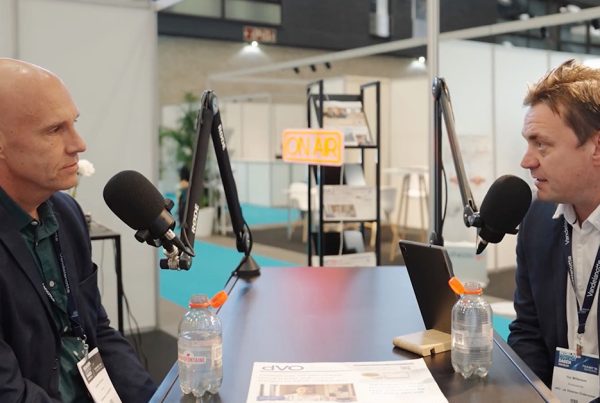
The gap often starts inside the company. In our dVO interview on the PR agency of tomorrow, our colleague Gunther described how CEOs mix genuine excitement about a new product with actual news value. At Backstage, we look for the hook before we call a journalist. Sometimes our honest advice is to advertise instead.
What makes a B2B product launch newsworthy?
A launch is newsworthy when people who do not know the brand would still care. Product launch PR starts with one test. Remove the product name and see whether a story remains. Five types of proof usually pass.
- A customer with a result. A named client, a problem and a measured change. Agree on both in writing before pitching.
- Data the market does not have. Anonymised usage data or a survey of your sector, with the sample and method stated.
- A deadline from outside. A regulation, labour shortage or cost increase that explains why the product matters this quarter.
- A local consequence. Jobs, a production site, a research partnership or a first client in the country you are pitching.
- An expert with a view. An engineer or founder who can discuss the problem for twenty minutes without selling.
The table below shows how the same announcement changes when it starts from proof. The examples are illustrative.
| Launch message | Story an editor can use | Proof to prepare |
|---|---|---|
| Our new platform automates invoicing | Mid-sized firms count the cost of invoice errors | Survey data and a client CFO |
| We launch a faster industrial sensor | A food producer cuts unplanned downtime | Measured results, site visit |
| We expand to Luxembourg | Cross-border employers juggle three payroll systems | Local partner, worked example |
Plain language does much of the remaining work. If the first paragraph needs a glossary, a generalist editor will move on, which is why companies lose media coverage through complex communication. Laura French, Marketing Director at Unit4, described our work for the software company as turning its “complex tech story into clear, engaging messages”.
How does product launch PR differ across the Benelux?
Product launch PR in the Benelux needs a separate media plan for each market, because trust and readership change at every language border. The imec-SMIT-VUB Digital News Report brief (2026) puts general trust in news at 49% in Flanders, 28% in Wallonia and 39% for Belgium as a whole. The Netherlands also scores 49%, while the Belgian average hides a gap of 21 percentage points between two audiences in one country. Luxembourg follows another logic, with a small, multilingual market that includes many cross-border commuters.
Its business magazine Paperjam reported 199,000 readers among residents and commuters in the 2026 Press Survey. For a B2B company, these differences affect the choice of outlet, spokesperson and proof. One translated release sent to a regional list treats three countries as one newsroom. A local client and a native-language spokesperson give each editor a reason to run the story.
| Market | Media to consider | Language | What to localise |
|---|---|---|---|
| Flanders | De Tijd, Trends, sector titles | Dutch | Flemish client, regional economic impact |
| French-speaking Belgium | L’Echo, Trends-Tendances, sector titles | French | Walloon or Brussels client, French-speaking expert |
| Netherlands | Het Financieele Dagblad, Computable, sector titles | Dutch, written for Dutch readers | Dutch client, Dutch market figures and terminology |
| Luxembourg | Paperjam, Luxemburger Wort, Luxembourg Times | French, German or English, depending on the title | Local partner, cross-border relevance |
A Flemish text does not automatically work in Amsterdam. Job titles, regulators and reference clients all differ, and Dutch editors notice a Belgian release with a changed dateline. With proof in only one market, launch there first.
An eight-week plan from launch date to published story
Eight weeks is a practical minimum for a product launch PR plan with client proof. Monthly trade magazines may need longer, so ask for their editorial calendars at the start.
- Week eight, test the news value. Write the headline you hope to read. If it needs the product name, improve the proof.
- Week seven, secure the evidence. Request client approval, figures and legal review early.
- Week six, build a short media list. Pick around ten editors per market, based on their recent articles.
- Week five, brief analysts and partners. Journalists may ask them for a second opinion, and analyst relations influences which Benelux vendors earn trust.
- Week four, prepare people and material. Rehearse questions on price, rivals and limitations. Put photos and facts behind one open link.
- Weeks three and two, pitch individually. Name the reader’s problem, the proof and the interview on offer.
- Week one, confirm and inform. Reconfirm embargoes, then brief employees and clients.
- Launch day and after, extend the story. Answer within hours and offer new material over the next 90 days.
Keep the pitch short. For a launch or update, the most popular length in the Cision survey was 100 to 200 words, chosen by 24%, and another 17% wanted less. Follow up with restraint, as 46% of the mostly US journalists in Muck Rack’s State of Journalism report (2026) immediately disregard pitches that are sent repeatedly without a response.
A fair can give the launch a natural date and a room full of editors. Book interviews before the doors open, as our article on trade show PR in the Benelux explains.
Should you offer an exclusive or an embargo?
An exclusive gives one outlet the story first. An embargo gives several journalists the information early, on the agreed condition that nobody publishes before a set time. Good product launch PR matches the choice to the news.
| Approach | Use it when | Main risk |
|---|---|---|
| Exclusive | One influential title can give the story depth | Other editors may ignore it afterwards |
| Embargo | Several markets or trade titles need time to prepare | A leak, or an editor who never agreed to the terms |
| Open release | The news is factual, modest or legally time-bound | Little reason for anyone to write more than a brief |
For a Benelux launch, a useful middle route is one exclusive per language market, published at the same hour, followed by the wider trade press. Get agreement to an embargo before you share details, because sending a document marked confidential creates no agreement. As Gunther put it in the dVO interview, “off the record does not really exist.”
Listed companies need a legal check first. If the launch is inside information, Article 17 of the EU Market Abuse Regulation (2014) requires public disclosure as soon as possible, unless the conditions for a delay are met. It also forbids combining that disclosure with marketing of the company’s activities. Let counsel set the timing and keep both documents separate.
How does launch coverage reach buyers and AI search?
Launch coverage keeps working after publication because buyers and AI assistants both use independent sources to understand a market. Muck Rack’s What is AI Reading? study (May 2026) analysed more than 25 million links cited by ChatGPT, Claude and Gemini. Journalism accounted for about 27% of citations, while press releases represented 1.1% and paid or advertorial content 0.3%. For questions about industry trends, 46% of responses cited journalism, and those sources were often less than six months old.
Industrial and manufacturing topics were the weakest sector for journalism, at about 19%, with company-owned material filling part of the space. The study used consumer-style prompts, so it does not measure B2B purchases directly. Its practical lesson still applies to a launch. Earn articles that connect the product to a trend, publish detailed technical pages on your own site and refresh both with new evidence at least twice a year.
Send each article to sales the same day. To evaluate product launch PR, count target titles reached, key messages included, branded searches, referral visits and opportunities in which a buyer mentioned the coverage. Our guide to PR metrics that convince management covers the board report.
Frequently asked questions
How long before a launch should PR start?
Start product launch PR at least eight weeks before the date, and earlier for monthly magazines or slow client approvals. Test the story and secure proof first, then pitch two to three weeks out. If the launch is less than a month away, focus on one market and one strong exclusive. You can widen the plan afterwards.
Is a press release still necessary for a product launch?
A press release still works as a factual reference, but product launch PR cannot depend on it. In Cision’s 2026 survey, 66% of journalists relied on PR material for story ideas, including releases, pitches and media kits. Only 22% asked for more releases. Write one per language, then put most of your effort into pitches and interviews.
Can a B2B launch earn coverage without a customer case?
Yes, provided other proof replaces the client. Original sector data, a university pilot, a live demonstration or an expert view on new regulation can all carry a story. Say openly that the product has no reference clients yet. Never present projected savings as results, because a journalist who asks for the source will soon find out.
Who should be the spokesperson for a product launch?
Choose the person who can answer the second question. The CEO suits stories about strategy, investment and jobs. A product lead or engineer suits trade press and demonstrations, ideally in the reader’s language. Whoever you name in the pitch must attend the interview, because swapping a promised executive damages your relationship with that newsroom.
Before you put the launch date in the calendar
Successful product launch PR in the Benelux is decided before the announcement, when the company chooses its proof, its markets and its first journalists. The 2026 evidence points in one direction. Cision found that 72% of journalists consider no more than a quarter of their pitches relevant, so a small, researched list has an immediate advantage. The same survey shows more demand for data, early access and experts than for press releases.
Trust in news differs by 21 percentage points between Flanders and Wallonia, so each language market deserves its own outlet and voice. Buyers add urgency, as 6sense found in 2025 that 95% of winning vendors were on the shortlist from day one. A company that wants earned media from a launch should therefore fix the date only after a customer, a data point or an expert story is ready to be published.
- Test the headline without the product name.
- Secure one piece of local proof for every market you pitch.
- Agree on exclusives and embargoes before sharing details.
- Plan 90 days of follow-up stories before launch day.
Backstage Communication plans and runs product launch PR for B2B companies, from the first test of news value to interviews and follow-up. Share your date with us while it can still move. We will tell you honestly whether the story is ready.