A journalist calls with 20 minutes’ notice. A product recall hits the news before your spokesperson has a statement. A CEO is asked a hostile question live on VRT. In each case, the difference between a reputation protected and a reputation damaged comes down to one thing: preparation. Media training in Belgium is not a luxury for listed companies — it is the baseline skill set every executive who speaks publicly needs.
What is media training?
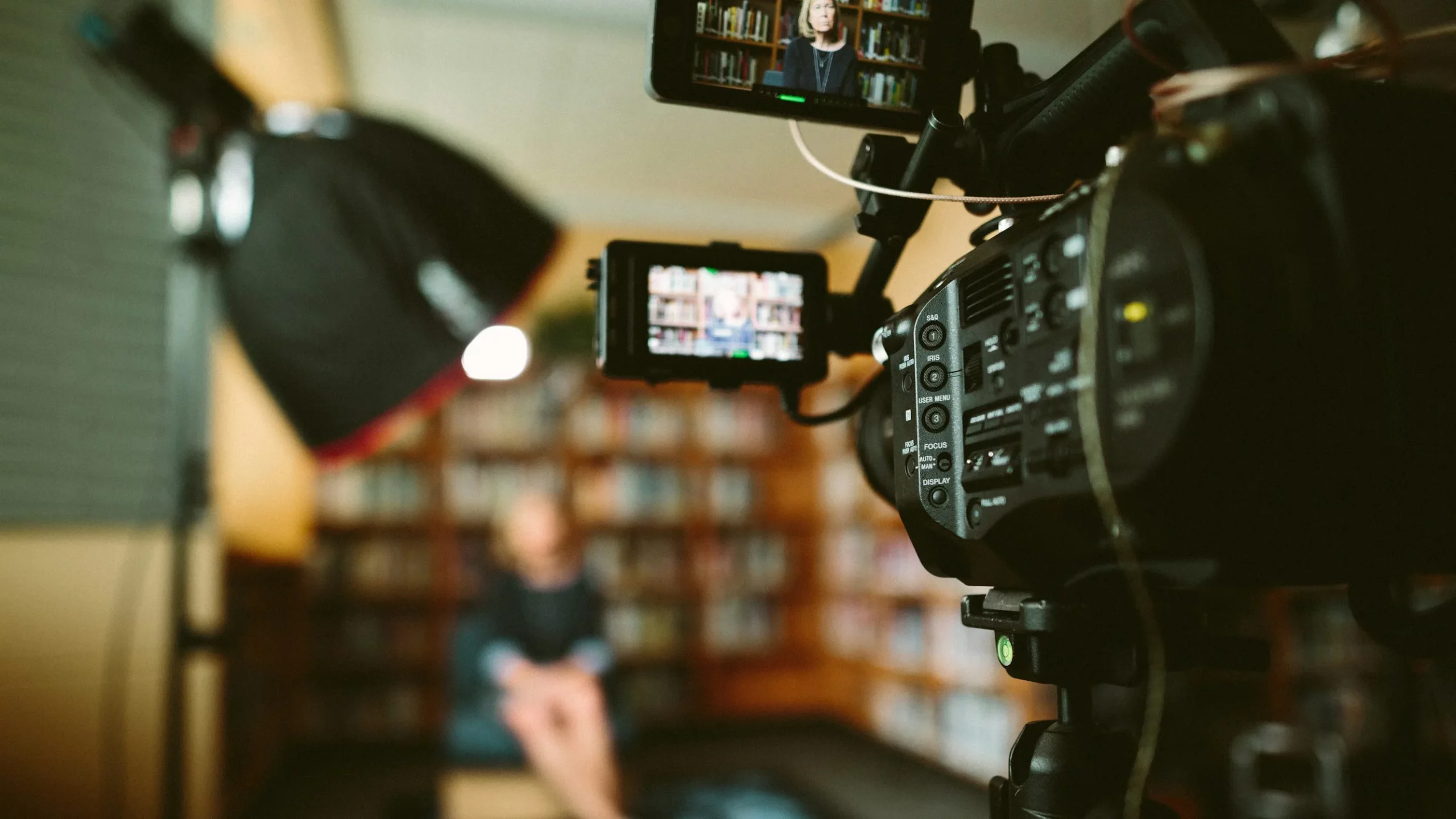
Media training is a structured professional programme that prepares executives, spokespeople, and communication leads to perform effectively in journalist interviews, press conferences, live broadcasts, and crisis scenarios. Unlike general presentation coaching, media training is built specifically around how journalists work: their deadlines, their framing instincts, and the techniques they use to draw out unscripted responses. A qualified media trainer — typically a former journalist or experienced PR professional — simulates real interview conditions, records responses, and provides structured feedback on message clarity, body language, and bridging technique. In Belgium and the broader Benelux region, effective media training accounts for the multilingual media landscape: executives may be asked to respond in Dutch, French, English, or all three within a single news cycle. According to the Reuters Institute Digital News Report 2025, Belgian audiences consume news across an average of 4.2 platforms per week, which means a poorly handled interview can propagate across channels within hours.
Why executives in Belgium and Benelux need media training now
The Belgian media environment has changed structurally in the past three years. The consolidation of print newsrooms — DPG Media now controls De Morgen, Het Laatste Nieuws, and Humo alongside its digital portfolio — means fewer journalists are covering more beats. A journalist who interviewed your CFO about quarterly results last year may be writing about your sector’s supply chain crisis this year. They arrive prepared. Executives who are not equally prepared hand them the narrative.
Three developments make media training more urgent than it was in 2023:
AI-generated news summaries. Google AI Overviews and Perplexity now surface company statements and interview quotes in zero-click answers. A poorly worded answer to one journalist does not stay in one article — it becomes a cited source in AI-generated responses across thousands of subsequent queries. According to SparkToro’s 2025 AI Search Report, AI-referred sessions grew 527% between January and May 2025. Your spokesperson’s words now have a longer, wider reach than the original article.
Multilingual simultaneity. Belgian executives at growth-stage companies regularly face Dutch-language questions from Flemish press, French from RTBF or Le Soir, and English from international financial media — often in the same press briefing. Bridging technique, message hierarchy, and pacing must be rehearsed in all three languages before a high-stakes moment.
The 24-hour news pressure on sources. Belgian newsrooms have cut verification time. Journalists expect usable quotes within the hour. Executives trained to give long, hedged, legal-department-approved answers are increasingly quoted selectively, with the hedges stripped out. Media training teaches the discipline of the short, complete, quotable sentence — the kind that survives editing intact.
What a professional media training session covers
A professional media training programme for Belgian executives typically runs across two to three sessions and covers six core competencies. First, message architecture: building a hierarchy of three key messages that hold under any line of questioning. Second, bridging and flagging: the techniques that allow a spokesperson to redirect hostile or off-topic questions without appearing evasive. Third, on-camera performance: pacing, eye contact, posture, and the specific adjustments needed for TV versus video call versus podcast format. Fourth, multilingual message consistency: ensuring that the same core message lands with equivalent clarity in Dutch, French, and English. Fifth, live simulation: recorded mock interviews with a trained journalist-interviewer, followed by detailed playback review. Sixth, crisis scenario rehearsal: rapid-response drills for reputational incidents where the spokesperson has incomplete information. According to a 2024 PR Week survey of 340 European communications directors, executives who had completed formal media training were 61% less likely to generate a negative media moment during a crisis.
The difference between media training and crisis communication training
These two disciplines overlap but are not the same, and conflating them is a common and costly mistake.
Media training is proactive and ongoing. It builds the foundational skills a spokesperson needs in any media interaction — routine interviews, product launches, earnings announcements, industry panel appearances. It is the base layer.
Crisis communication training is scenario-specific. It rehearses the response to a defined incident: a data breach, a product recall, an executive misconduct allegation, a supply chain failure. It assumes the spokesperson already has media training and focuses on the decision-making process under time pressure, the approval workflows for statements, and the coordination between legal, HR, and communications functions.
In practice, Belgian companies that have not invested in ongoing media training tend to discover this gap at the worst possible moment — when a crisis has already broken. The executives called to the press conference have never been on camera before. Their first live interview becomes their training session, with a journalist as the trainer.
For companies in regulated sectors — life sciences, financial services, real estate — this gap carries specific regulatory risk. Spokespeople who stray outside approved messaging during a media interaction can create material disclosure problems. The investment in media training is, in those contexts, also a compliance investment. Backstage Communication’s crisis communication approach for Benelux companies covers the structural preparation in more detail.
How to choose a media trainer in Belgium
The Belgian market for media training is small enough that reputation travels fast and large enough that quality varies significantly. Four criteria matter when selecting a provider:
Journalism background, not just PR background. A trainer who has worked as a broadcast journalist or senior press correspondent understands the interview from the other side of the table. They know which answers invite follow-up, which phrases get edited out, and which gestures read as defensive on camera. Trainers who come only from corporate communications tend to prepare executives to give corporate answers — which journalists are trained to work around.
Multilingual delivery. If your executive team operates in Dutch and French, the training must be conducted in both languages, not translated after the fact. Message bridging in Dutch has different rhythms than in French; the pacing of a Belgian French interview differs from a Flemish one. A trainer who delivers in English only and advises executives to “just apply the same principles” in other languages is not prepared for the Belgian context.
Sector relevance. A trainer who has worked with life sciences companies understands that spokespeople cannot speculate about clinical outcomes. One with financial services experience knows the boundaries around forward-looking statements. Generic media training that does not account for sector-specific constraints is a liability rather than an asset.
Recorded simulation with structured review. Any media training programme that does not include video recording and structured playback is not media training — it is a briefing. The gap between how an executive believes they perform and how they actually appear on camera is almost always significant. The recording is the training.
Effective CEO positioning in Belgium requires this foundation to be in place before a business leader steps into earned media. Authority built through thought leadership is undermined immediately by a single poorly handled interview.
FAQs
How long does media training take?
A foundational programme for a senior executive runs two to three sessions of three hours each, spread over two to four weeks. This allows time for preparation, recorded simulation, feedback integration, and a final rehearsal under pressure. A single one-day intensive is possible for executives with existing media experience who need to prepare for a specific high-stakes event.
Does media training cover social media and podcasts?
Modern media training programmes should include both. The techniques differ: social media requires message compression and tone calibration for text formats; podcasts are long-form and unedited, which means executives need to sustain message discipline over 45–60 minutes without the safety net of editorial cutting. Ask any provider explicitly whether these formats are covered.
How often should executives be retrained?
For executives in active spokesperson roles, a refresher session every 12–18 months is standard practice. After a major reputational incident, a refresh should happen within 30 days of the situation resolving — while the learning is still concrete. New executives in spokesperson roles should complete training before their first external media engagement, not after.
Is media training useful for non-crisis situations?
It is primarily useful for non-crisis situations. The majority of media interactions a Belgian executive will face are routine: a trade publication profile, a business press interview about company growth, a panel appearance at a sector conference. These low-stakes moments are where habits are formed. A spokesperson who handles routine interviews well builds the muscle memory that holds under pressure when a difficult story breaks. The shift in what modern PR requires makes this proactive investment more valuable, not less.
Key takeaways
Media training is the foundational investment that determines whether a Belgian executive’s public appearances build authority or erode it. The Benelux media landscape in 2026 presents three compounding challenges: AI-powered news distribution that extends the reach of every quoted statement, a multilingual media environment that requires message consistency across Dutch, French, and English, and compressed newsroom timelines that leave no margin for unprepared spokespeople. A professional media training programme covers message architecture, bridging technique, multilingual delivery, on-camera performance, and crisis scenario rehearsal — and must include recorded simulation with structured review to be effective. According to PR Week’s 2024 European Communications Survey, trained executives are 61% less likely to generate a negative media moment during a crisis. For companies in regulated sectors, this is not a communication preference — it is a risk management requirement. The right time to invest is before the journalist calls.