
A crisis doesn’t give your communications team time to think. By the time a regulatory body issues a statement, a social media post goes viral, or a journalist calls for comment, the story is already forming in people’s heads, often without your side of it. The first 24 hours determine whether a company emerges credible or defensive, whether stakeholders assume competence or panic. Crisis communication is the discipline of moving faster than the story itself.
What crisis communication actually is
Crisis communication refers to the immediate, strategic response a company deploys when facing a reputation-threatening event: a product recall, workplace accident, regulatory violation, executive misconduct, data breach, or operational failure. It differs from routine PR in scope and speed. While standard communications campaigns build visibility over weeks, crisis communication compresses decision-making, messaging, and stakeholder notification into hours. The stakes are discrete and high: a company either controls the narrative or gets defined by external commentary, and the window to influence which happens is often measured in the time it takes for a journalist to write a story or an employee to post on social media. For Belgian companies, the added layer is language and jurisdiction. A crisis triggering Dutch-language coverage may simultaneously surface in French-language media and international press, each with different regulatory scrutiny, cultural norms around corporate accountability, and speeds of escalation. A workplace incident that results in injury is not just a reputational event. It is a potential OSHA-equivalent notification under Belgian Labour Law (with its own timelines and disclosure obligations), a matter that may require immediate works council communication, and a story that will be told three times over (in Dutch, French, and English) before the company’s first formal statement is published.
Why the first 24 hours matter more than the crisis itself
Psychologists call it the “illusory truth effect”: people tend to believe claims simply because they’ve encountered them repeatedly, regardless of source credibility. Social media and news feeds exploit this. A claim posted at 10 AM gets reshared 50 times by noon, retweeted by journalists by 2 PM, and by 6 PM it has become “common knowledge” even if it’s partially inaccurate. A company that waits 48 hours to respond is not catching up. It’s chasing a narrative that has already calcified. According to the Reputation Institute’s 2025 Crisis Communication Report, companies responding within 4 hours to a public crisis saw 34% faster reputation recovery than those waiting 24+ hours, and those with a pre-planned response framework recovered 60% faster than those improvising replies. The gap isn’t just speed; it’s control. A company that gets ahead of a story with facts, transparency, and a clear action plan can frame the crisis as “something we identified and are handling” rather than “something that was discovered by outsiders and forced our hand.” The 24-hour window is where that framing gets decided.
The Belgian context: jurisdiction, language, and escalation paths
Belgium’s labour law, financial regulation, and media environment create cascading communication obligations that most crisis playbooks miss. A workplace accident that injures an employee must be reported to the OWAPCOV within 24 hours, documented with the insurance company, and flagged to the works council (with statutory advance notice requirements). Simultaneously, a journalist calling for comment expects a response within hours, not days. A financial firm or listed company facing regulatory scrutiny from the FSMA faces additional disclosure obligations. Silence or delayed statements can trigger regulatory escalation, not just reputational damage. And a crisis that surfaces in Flemish media may evolve completely differently in Walloon outlets, with different stakeholder expectations around accountability, speed of response, and tone. A statement that reads as transparent and appropriately cautious in Dutch may read as evasive or overly legalistic in French, or vice versa. The companies that manage crises best in Belgium are not those with the most sophisticated PR teams. They are those that have already decided, before a crisis hits, what they will communicate in Dutch, French, and English; which internal stakeholders must be notified first (works council, insurance, legal, executive leadership); and how long each notification step takes. That pre-planning collapses hours off the response time when the crisis actually arrives.
The anatomy of the first 24 hours: what actually happens
A functional crisis response follows a sequence, and the companies that execute it best have already rehearsed the sequence so thoroughly that execution is mechanical, not improvisational.
Hour 0-1: Internal lockdown and fact gathering
The moment a crisis is identified (not when a journalist calls, but earlier, from internal alerts: customer complaints, regulatory notifications, employee reports), the crisis team convenes. Before any external statement is drafted, the team must know what are the facts, what do we not know, what could we learn that would change our response, and what are our legal constraints. Do we have to notify insurance, regulatory bodies, or the works council before we can comment publicly? This phase is internal only. No social media, no media response, no employee communication yet. The goal is to prevent the company from saying something publicly that contradicts facts that emerge later.
Hour 1-4: Stakeholder sequencing
The works council (if applicable) must be notified early, not as a courtesy, but as a legal requirement for any crisis affecting company reputation or operations. Insurance companies need early notice (delays can void coverage). Legal and regulatory bodies may have reporting timelines (the OWAPCOV labour accident report, for example, is due within 24 hours). Senior leadership needs context before any public statement goes out. Only after these internal obligations are met does the company address external stakeholders. The sequencing matters: if the works council hears a crisis from the news instead of directly from management, it becomes a second crisis (breach of labour law consultation rights).
Hour 4-12: Statement and immediate response
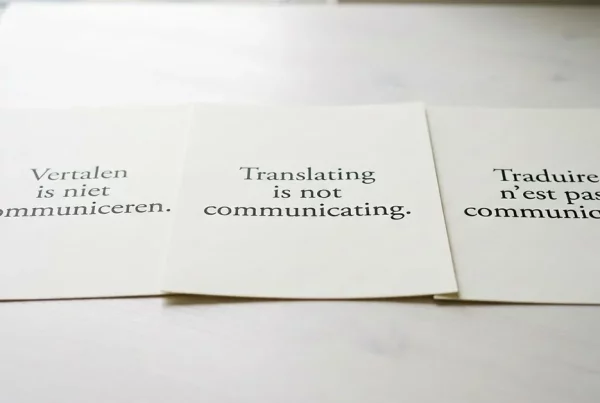
A holding statement or full response is drafted, reviewed by legal and communications leadership, and released. For companies operating across language communities, this means three versions (Dutch, French, English) that are not translations but culturally adapted statements. The tone, formality, and framing appropriate to each audience matter. Simultaneously, the communications team is monitoring social media, news mentions, and employee forums to catch emerging stories and identify where the narrative is diverging from facts.
Hour 12-24: Narrative stabilization
Follow-up statements, employee town halls, customer emails, media interviews. These all land within the first 24 hours to “lock in” the narrative while it’s still forming. Companies that wait three days for follow-up information are competing against stories that have already gone through multiple iterations, each potentially adding inaccuracy or speculation.
What a crisis response looks like in practice
A mid-sized Benelux manufacturing firm discovered a quality issue in a product batch that had already reached 40% of its customer base. The discovery was internal; no customer had yet complained. The crisis team had eight hours before the first customer likely discovered the issue and before the window to “get ahead of the story” closed.
Hour 0-2: Internal fact-gathering confirmed the scope (40% of the batch, specific serial numbers, no safety risk but operational impact). Legal confirmed: insurance must be notified, but no regulatory reporting was immediately required (no injury, no breach of safety law). The works council did not need statutory advance notice (this was operational, not a reputation or restructuring matter).
Hour 2-4: A holding statement was drafted and approved: “We identified a quality issue in [product batch]. We are notifying affected customers directly and offering [solution]. Details: [link].”
Hour 4-6: Three-language versions of the holding statement, a customer notification email, and talking points for the sales team were ready.
Hour 8: The first customer complaint hit social media. The company’s response, a direct customer message addressing the specific complaint, referencing the public statement, was live within 90 minutes.
Hour 24: A follow-up statement with longer-term remediation details was published. The company had already handled 14 individual customer inquiries with personalized replies referencing the public statement, reinforcing consistency.
The crisis was contained not because the quality issue was minor, but because the response was faster than the story’s spread. By hour 24, “company has a plan” was the dominant narrative, not “company is hiding something.”
Building a crisis communication framework before you need it
The companies that survive crises best are those that have already made the hard decisions before the crisis arrives. According to Harris Insights & Analytics 2025 Crisis Preparedness Study, companies with pre-established crisis frameworks had 42% higher stakeholder trust scores during and after crises compared to those responding ad hoc. A working framework has five elements:
A named crisis team with clear roles
Not “everyone helps” but specific people accountable for decision-making (usually CEO, legal, communications, operations lead). Decision rights pre-decided: who can approve statements, who decides notification order, who owns media response?
Pre-written holding statements in three languages
These are templates, not final statements, but they compress the first two hours of decision-making into “fill in the specifics and release.” A company that has to write a statement from scratch during a crisis loses those critical first hours to meetings and rewrites.
A notification sequence checklist
Works council first or legal counsel first? Insurance notification timing? Regulatory reporting requirements? Investor disclosure obligations (if listed)? This should be a single document, reviewed by legal annually, not something the team is debating while the crisis is unfolding.
A monitoring plan for the first 48 hours
Who watches social media? Who monitors news? Who tracks internal chatter (employee forums, Slack, works council response)? Assign one person per channel; check every 2-4 hours for the first 48 hours.
An annual crisis simulation
Run a tabletop exercise once a year with the crisis team, using a realistic scenario (product recall, data breach, executive misconduct, whatever is most relevant to your industry). The simulation surfaces gaps in decision-making, misaligned assumptions, and unclear roles. It is awkward and revealing, which is exactly why it matters. A crisis discovered in a simulation is a crisis prevented in reality.
Frequently asked questions
How much silence is too much silence during a crisis?
Four hours. Beyond that, the absence of an official statement is itself read as confirmation of mishandling. Even a holding statement (“We are aware of [issue]. We are investigating and will provide an update within 24 hours”) is stronger than silence, because it signals awareness and action. The goal is to demonstrate control and transparency in the first critical window before external narratives harden.
Should a company admit fault immediately, or wait for all facts?
Say what you know factually. “We identified a quality issue in [specific batch]” is an admission of fact, not guilt. Admitting fault (“we failed to catch this”) before knowing the root cause can expose the company to unnecessary liability. The frame is: “We found the issue. We are investigating the cause. We will take appropriate action.” This is transparent without overcommitting before you understand what happened. It also allows you to link to articles on corporate communication strategy if stakeholders need broader context.
Do we have to notify the works council before the media?
Under Belgian labour law, if the crisis affects company reputation or operations materially, yes. Works council notification takes statutory priority. This is often counterintuitive for communications teams used to media cycles, but getting it wrong is a second legal crisis on top of the operational one. Many companies that face dual crises (operational plus labour law breach) could have avoided the second by simply sequencing notifications correctly.
What if the crisis is still unfolding and facts keep changing?
Release what you know, note what you’re still investigating, and commit to a timeline for the next update. “We know [X]. We are still determining [Y] and will update by [time].” This beats silence or a statement that becomes inaccurate 12 hours later. This approach aligns with reputation management principles: consistency and transparency trump perfection.
Getting started
The moment a crisis arrives is too late to start planning. If your organization doesn’t have a crisis communication framework in place, the next step is straightforward: schedule two hours with your leadership team to map the crisis scenarios most likely to affect your business, assign roles, and draft holding statements in your working languages. That single investment collapses hours off your response time if a real crisis does arrive. If you need help stress-testing your framework or building one from scratch, that’s exactly what we do at Backstage Communication. We’ve guided Belgian companies through crises large and small, and we know the missteps that turn a contained incident into a compounding disaster. The difference between a company that recovers and one that doesn’t often isn’t the size of the crisis. It’s the speed and clarity of response.